Wednesday, March 14, 2012

What can I do? Am I my brother's keeper?

Yom chamishi, 21 Adar 5772.

There's this couple I know.  I don't like to talk about them.

He beats the kids.  She knows about it.  But she wants to keep up appearances, because it really, really matters to her what the neighbors think of her and the kids.

I feel that it's my civic responsibility to get the word out, so that maybe somebody will stop him.

She's been my friend for years.  But quite frankly, she is beginning to disgust me a little.  I mean, it's her kids, for crying out loud!

She tells me that he's trying, that he doesn't mean to hurt them, that he really wants everything to be normal for everyone.  He says he never hits them without provocation.  I guess that is what makes it hard for me to believe anything he says.  Because on the one hand, he says he wants to be a normal family -- at least, that's what he tries to convince the neighbors he wants -- but then he says that it's all the kids' fault.

I overheard a conversation he had with some of his cronies.  He really thinks the children need to be taught a lesson.  He really doesn't have any remorse.

But she is the one who breaks my heart.  I don't honestly expect anything from him.  He's a jerk.  (He was abused as a kid for years; and he takes it out on his kids, and makes excuses.)  But she says she loves her children; and yet she has watched this thing happening to them, year after year, for almost a decade.  And she keeps putting on nice dresses, and going out in public, pretending that life is good... while her kids are at home, hiding under the bed.

@%@%@%@%@%@%@%@%@%@%@%@%@

Now I must apologize, dear reader.  I am assuming you are as angry as me, and think this woman should get some sense, and that she should divorce this guy, and protect her kids.  Right?


The husband is Gaza.  The wife is the Israeli government.  And the beaten children really are mostly children.  They are the citizens of southern Israel, who have been bombed routinely for the last eight-plus years, with more than 200 bombs being fired at them in less than a week, purely for the "crime" of being Jews, in the so-called wrong place.
Citizens of Ashdod running to shelters when siren sounds ~ Photo credit: Jim Hollander

Many of these children will reach bar and bat mitzvah without a memory of a time that didn't include terror, running to bomb shelters with only 15 seconds to spare, school closed randomly because bombs are falling nearby, the stress on their families, the shame of wetting their beds long after the acceptable age...

I feel like that child beater's enabling wife's friend.  I love my country.  I have a long-standing respect for Israel.  She's been my friend for years...

But I must not be deaf to the booms and the bombs and the sirens just a few kilometers to the south of me.  I have to look at myself in the mirror every day; and I can't allow those children to continue being beaten with my complicit silence.

Sunday, March 11, 2012

Freedom Isn't Free

Yom rishon, 16 Adar 5772.

All the old war movies used to say that.  "Freedom isn't free."  It sounded tough; but I didn't really get it as a teenager.  I was a little more in tune with "Freedom ain't worth nothin' when there's nothin' left to lose."  Bobby McGee resonates so much better to a young Liberal than does John Wayne.  But then, life did what it does, in it's twisty-turny way.  I ended up in the army.  And I understood John a little better, and couldn't quite remember what it was I'd seen in Bobby.

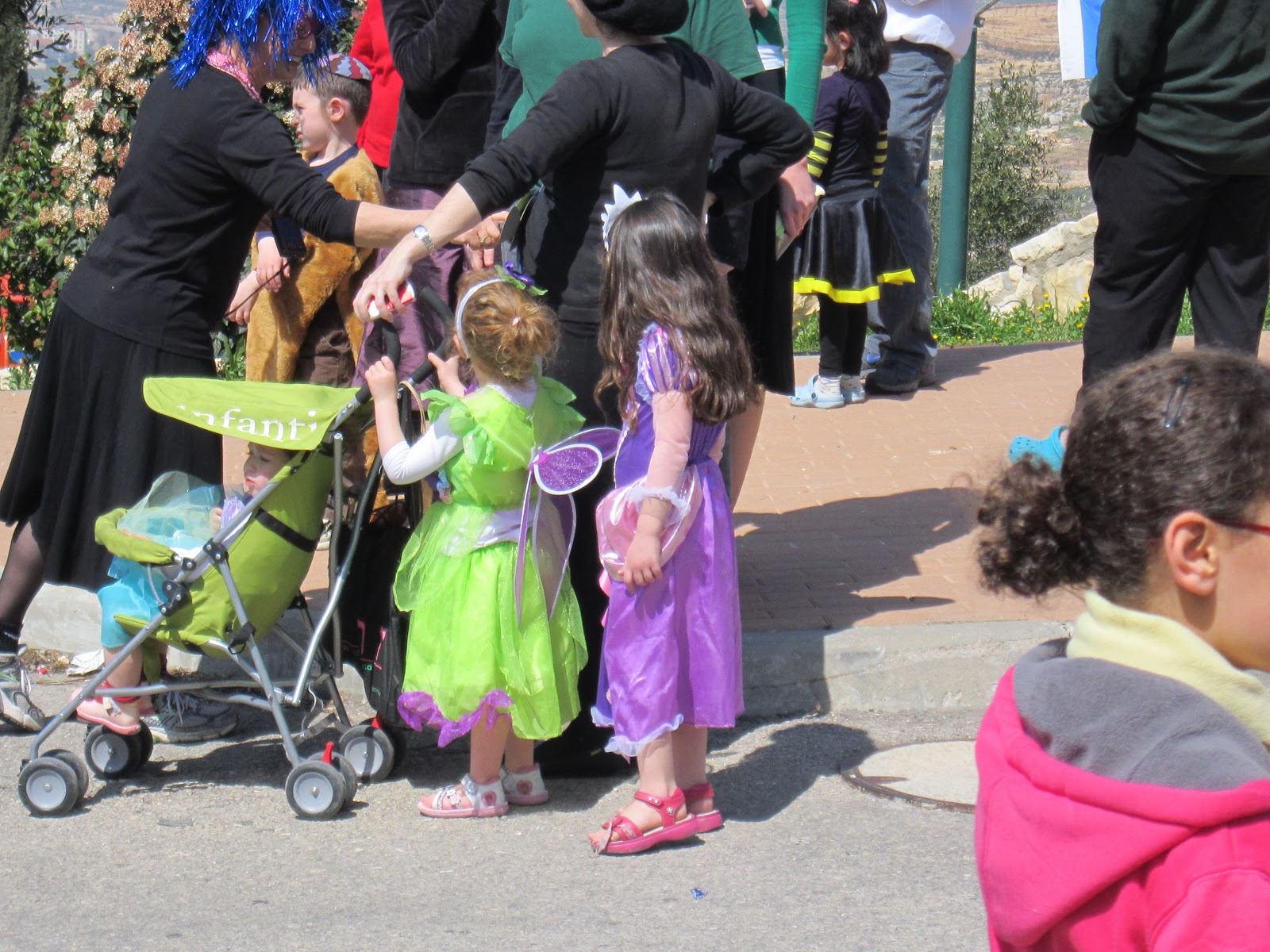
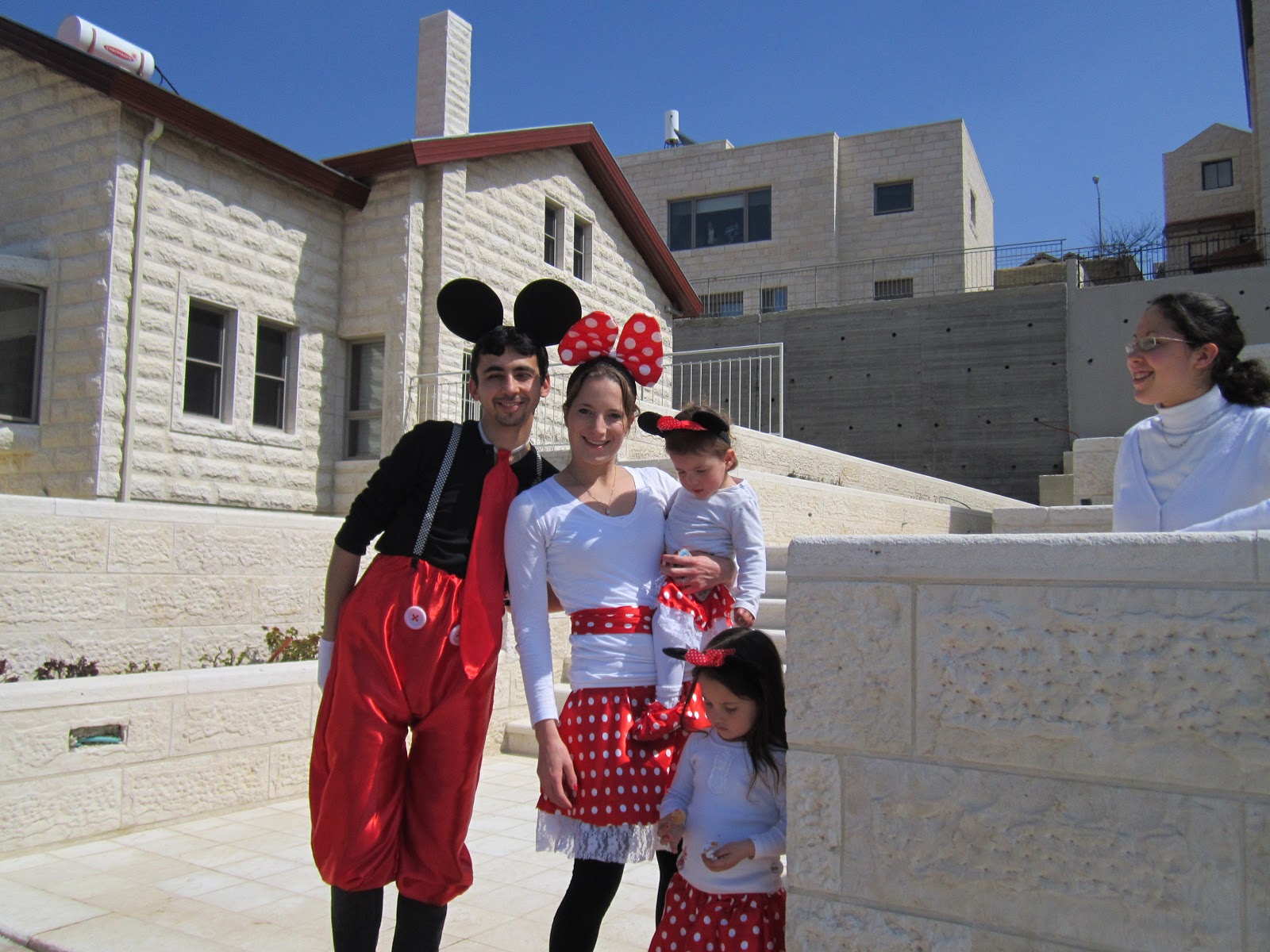
Below you will see pictures of my delightful Purim celebration, interspersed with the words of the Purim of one of my soldier sons.  Just to remind myself that all this delicious freedom I get to celebrate isn't free.


Purim 5772. Where was I?


I was not at a table with my family eating and drinking. I was not out delivering Mishloach Manot. I was not dressed in some goofy costume dancing in the streets of Jerusalem. For I am a soldier; and I have a job to do.


As the Fast of Esther came to a close, before I even put a morsel of food in my mouth, we were loaded onto Blackhawk helicopters and taken to the northern part of Israel to continue our week-long training exercise. We had been training the whole week in many different parts of the country. The week is meant to prepare us for the most extreme warfare conditions. We eat very little, sleep even less, march through the night, and execute combat exercises with fervor.


When the helicopters landed we marched a few kilometers to the meeting point. There, in a pitch black field far from our celebrating nation, a group of soldiers in battle gear, with one flashlight, read the Megilla.


Immediately afterward, we ate whatever food we had and drank as much water as possible to prepare our tired bodies for the 13 kilometer march to the next combat exercise location.


We arrived as the first rays of morning shone over the horizon. We stopped and curled ourselves up, fighting the freezing winds to try and catch some sleep.


We woke to the joyous shouts of some young Chabadniks chanting Purim songs and handing out Mishloach Manot. The religious soldiers again gathered together and read the Megilla. There was dancing and singing. The Purim spirit was felt by every person there, by every soldier.


From there we began a very long combat exercise and we became focused again on the mission, on our job.


Like that, Purim came and Purim went.


Why was I there? I was there because, as every Jew knows, although we celebrate the hanging of Haman, evil has yet to be vanquished. I was there because we live with the sobering reality that as we try to drink enough to confuse "blessed be Mordechai and cursed be Haman," our enemies know very well who Mordechai is and how badly they want him destroyed. Their hatred and Amalek's determination for our downfall allow us no days off. We must always remain vigilant and ready.  In the days of the first Purim, Esther received permission to annihilate the enemies of Israel.  We pray for the day that, just as then, we in our days will be given permission by the One True King to smash our enemies into dust and lay waste to evil for eternity. Amen.


For now, however, we will be out there training. Putting aside our individual lives for that of the Nation. Reading the Megilla under the stars, with camouflage paint and a smile on our faces. And as the officer remarked before he began to recite the blessing on the Megilla: "It may not be ideal; but one thing is for sure -- you won't forget Purim 5772.” 


~ Yeshiva Bochur, aka Sage Zion, aka Exiled Warrior
 Thanks, guys.  Thank you for letting us celebrate, while you watched our backs.  May you celebrate many happy, joyful Purims, with your wives and children and grandchildren, safe and free and all around you.

Tuesday, February 21, 2012

"Even if you are a minority of one, the truth is the truth."

Yom shlishi, 28 Shevat 5772.

What is good about Israel?

Among myriad other things, Israel is a place where a self-proclaimed "Israeli-Arab-Muslim-Palestinian" can be pro-Israel.

photo credit: The Jerusalem Post online
Khaled Abu Toameh, the Palestinian Affairs Correspondent for the Jerusalem Post, addressed the Conference of Presidents of Major American Jewish Organizations yesterday.  According to Yochanan Elrom of IBA News, Abu Toameh says that "the government should hold foreign journalists accountable for biased reporting."

What follows is my transcription of an excerpt of Abu Toameh's speech before the Conference, copied from the IBA News television broadcast of 20 February 2012.  Pay close attention to the little trick Abu Toameh plays on some of his foreign colleagues.  It proves an important point, especially when you are trying to understand why your friends and family members in the States want to know why Israel is oppressing the Palestinians at every possible turn.  Don't throw up your hands in exasperation.  Keep patiently teaching them.  You are fighting a very large media establishment -- but truth will out, in the end.


"If you come with this fixed idea that Israel is bad and the Palestinians are good, what can you do?  Where does it start?  I think that it starts already back [at the journalist's] home, probably at the university campuses, where these people came from, probably from their culture and society...

"There is not much that you can do, other than try to explain.  But I would say that it would be very important to chase these journalists and highlight the mistakes that they make, and try to expose the factual errors that they do -- and they do many of them.  I think that would be Israel's main job for now...  not allowing them to get away with what they are doing.

"Recently, just a few weeks ago, the families of some Palestinian university professors phoned me from Nablus, and they said, 'Can you help us?  Can you bring the international media here?'  I said, 'What happened?'  They said 'The Palestinian Authority has just arrested a number of Palestinian university professors.'  So I phoned nine of my Western colleagues to offer them that story; and out of the nine, only two agreed to do the story.

"Okay, so a few days later, I phoned the same group of journalists, with a story that I made up.  And what was that story?  That there's this Palestinian professor in Ramallah, who has applied for a permit to go and eat fish with his family in a restaurant in Jaffa; and the Israeli authorities have still not issued the permit.  Out of the same nine journalists, six asked me for that professor's number, because they wanted to contact him tonight, because that is an Israeli atrocity, and it should be covered extensively.

"This is just one example...  I think Israel's also not doing a very good job in highlighting many of the things that are happening under the Palestinian Authority and under Hamas.  And that's very important.  Many Western journalists don't know about these things...   I'm even frustrated with the Israeli media..."

We have a lot of work to do, at home and abroad.  The nice part is that each of us can help.   Arm yourself with facts -- and don't keep them to yourself.

The title is a quote from Mahatma Gandhi.

Thursday, February 16, 2012

A Soldier's Bird's Eye View from Outside the Plane

Yom chamishi, 23 Shevat 5772.

This is a long post, but worth the read if you've ever wondered what it feels like to fall from the sky.  Yeshiva Bochur (aka "Sage," aka Exiled Warrior) writes beautifully, from the heart.  Share his adventure.


"The more fears one overcomes, the more alive he becomes." - Sage 
I have recently had the unique opportunity to parachute from a plane at 400 meters as part of my military service in the Israeli Airborne Division (חטיבת הצנחנים). 


At the request of my mother, and for the sake of not losing those precious moments beneath the sands of time, I will attempt to describe the indescribable.


The hour is 12:00 noon when you arrive at the runway. They have already canceled so many jumps that you don’t even feel any anticipation. You strap on the large parachute, close the clips and tighten the straps. You now wait to be checked by one of the instructors. A few minutes go by; he checks you; you sit and wait for the plane.

Pre-flight confidence:  "Everyone's brave while he's on the ground."

12:45 – Still nothing. You start to wonder what it will be like. People around you are guessing and telling rumors of what they have heard. Some are afraid, some are excited. You start to pray. Not out of fear, but out realization of how much we depend on His protection.

13:30 – You start to doze off. The soldier next to you is already saying how he is positive they've canceled another jump. By this point you just want to do something.

13:45 – Suddenly, the first plane appears, and with it, a large wave of reality. You are set to be on the next plane. Is this really going to happen? You watch the first group march into the unknown, and your heart starts to beat a little faster. The plane takes off; and it is quiet again on the runway. But everyone is awake. Preparing himself.

14:00 – The plane – your plane –- arrives. The instructor, with a smirk on his face, tells everyone to rise and begin to march. You start to walk slowly, staring at the helmet of the soldier in front of you. Someone puts a hand on your shoulder. You turn around, it’s your friend from your barracks. He smiles at you, and you both raise your eyebrows as if to say: "What the hell, let’s do this." Just seeing him comforts you.


Before you know it, you’re entering the plane. Your eyes dart from place to place. It looks the same as the one on the video; but in a way it looks completely different. Time stops. 


Your mind is focused. The thought of what you are about to do, the danger, the fear, the uncertainty, stay concreted in your brain.


You sit. Another person sits across from you. You have never seen him before; but suddenly, he is your best friend. You look at each other. You see he is sweating. You tell him, uncertainly, that it'll all be fine. He mumbles something; it doesn’t matter what, and you smile at him. You are in this together and you can feel it. You pull out the תפילת הדרך לצניחה (the Wayfarer’s Prayer for a safe jump). You recite it. You look up at your new friend, and hand it to him. The prayer is handed from soldier to soldier, each connecting in his own way. It’s the last time you see that little piece of paper.


The plane starts down the runway. You feel the wheels churning and the powerful engine working, kicking into full gear. Guys begin to sing and shout. You join in. It helps.

The plane lifts off. You have left the security of the ground. Higher, higher, higher... You are given the command to stand. You are the third in line. By this point, you have to stop worrying: there is no time for that now. You focus. You know what you have to do. You trained for a week for this very moment.

The doors open. The wind rushes in. You can see the ground below. You close your eyes, but then almost immediately reopen them. This is it. You’re going to jump. The red light is on. The first guy in line steps up to the door. He is stricken with fear. Everyone waits for the green light, giving us the go ahead. You stare at the red light. It stares back at you as if with an evil grin.

Green light. You hear the instructor tell the first one to jump, and he is gone. The second is at the door; and then he, too, vanishes. It’s your turn. You were told that by this point your brain would shut off. It hasn't. You move quickly to the door, pushing away fear.

"Jump!" You feel the slap on your back. As if in a dream, you are transported into open space. You don’t remember jumping; it’s more like you just appeared there. The world is flying around you. Your body is being hurled about at the will of the wind. You count: "Twenty one, twenty two, twenty three." You feel a jerk, and everything stops.


You look up. Your parachute has caught wind and hangs above you peacefully. You laugh. Not a simple laugh. A deep-rooted laughter comes pouring forth from your very soul. Laughter of salvation. From darkness to light, chaos to redemption.


You are now alone. You can hear your heartbeat in the silence of this eternal moment. Your friends fill the sky around you. You feel like you are on top of the universe. Everything is still.


You look down. You see now the direction you are being carried. This is an important fact you will need in order to execute a perfect landing. You now can feel the sensation of falling. The ground begins closing in.


Thirty meters above ground, as you were trained, your prepare your body for the ground’s impact. You begin now to see the speed at which you are falling. The ground is getting ever closer. You glance down at your feet to make sure they are straight. Your knees are bent. Your hands tighten around the parachutes straps. You are ready. The ground now looks as though you are looking at it from within a moving car. Your body tenses. You are very close. The ground is only a meter away.

Impact. Your body slams into the ground. Your eyes are shut. A second passes. You open your eyes. You feel a jerk on your shoulders as the parachute tugs at you, as the air leaves its massive belly. You stand up. You’re fine. Thank God! Soldiers are falling all around you. You see one guy not press his legs together. He'll probably hurt a little; but he'll be fine. Happiness is all you feel. You pack up the chute, brush off the twigs and sand that you landed on, and start heading for the meeting point. You see the soldier who sat across from you in the plane. Without a signal or a word of any kind, you both embrace, full of joy. You ask him how it went; he tells you his story; you tell him your adventure. And you part. Maybe for good – but the moment is cherished.

As you're piecing together all that has just occurred, the images rush through your mind. You feel just a bit taller. Like a new man. You have crossed over a border, a limit you used to have. Fear bows his head before you, conquered. You are freer now. The next limitation, the next dread awaits you, and you are ready for it.
Ready for any new challenge

Most aerial shots taken by the proud father of the Tzanchan.

Wednesday, February 15, 2012

Voting, Springtime, New Beginnings

Yom revi'i, 22 Shevat 5772.

Yesterday was voting day in the Gush.  (Finally!)
Signs, signs, everywhere a sign...
Several of us who live on this street thought it was a celebration about us!

We've behaved better.  We will again.  Fortunately, those who spoke out against the questionable election behavior outnumbered those who participated.

(It was also Valentine's Day, in case you thought we didn't observe the "really important" holidays.)

The morning after.  Nice cleanup, guys!  Thank you!
Looks just like my street again.

The bottom line is that the post has been filled, presumably by someone who will try his best to build and maintain unity among his supporters and his opponents.  May Hashem bless him and us with success in the things that truly matter.

As more than one writer pointed out, it is important to take advantage of the privilege to vote afforded in the only true democracy in the Middle East.

Sports Guy's voter's card
Our 17-year-old Sports Guy voted:  something he would have had to wait another year for in America.  His father and I are proud of him.

@%@%@%@%@%@%@%@%@%@%@%@

We don't need the groundhog in Israel.  We have the almond blossom.  The weather man says we should expect cold and even snow over Shabbat -- so I thought I'd better capture the springtime to gaze at when the temperatures drop.


@%@%@%@%@%@%@%@%@%@%@%@

There's a new kid on the block in Israeli journalism, brought to you by an old favorite of mine -- David Horovitz -- who recently retired from his position at the Jerusalem Post.  David is much more middle-of-the-road than I am; but he has always seemed reasoned and fair.  Please give his new publication, The Times of Israel, a place among your sources on the Israel news scene.  My bracha for the fledgling venture:  "May your entire staff be blessed with clarity, with wisdom, and with much success in meeting your noble goals. May The Times of Israel be a light unto the journalists of the nations."


Here's hoping for good news through the month of Shevat!

Friday, February 10, 2012

Iran and the Bomb -- What, Me Worry?

Yom shishi, 17 Shevat 5772.

My dear Miriam,

You wrote to me, asking me to give you some chizuk about the situation with Iran.  You wanted to hear how we cope, to perhaps pick up a little strength to ward off your own worry for us and for others you love in holy Israel.  And because I love you, I wanted to satisfy that request.  But, of course, I don't know if I can.

Because, you see, you are a very intelligent woman, who keeps abreast of current events, and who understands what is going on in the region and world.  It is perhaps your very intelligence that is your enemy, in this case.

Can I tell you our secret?  You have to be a little brainless to live in Israel.

Now that I have given you a chuckle (I hope), let me explain.  In this case, "brainless" doesn't mean stupid.  It doesn't even mean uninformed.  It just means that we don't use our brains on these issues.  We use our hearts, and our emunah.

I have been taught by wonderful rabbis that G-d keeps is eye on Israel from the North to the South, and all year 'round.  I have been taught that the safest place on the planet in the Last Days for a Torah Jew is Eretz Yisrael.  Living here has only increased my awareness that Hashem involves Himself in our lives on a daily basis; and if we allow this realization to seep in, He doesn't hide this fact from us.  I know that the whole world is in danger.  But I feel secure that Hashem runs the world -- and if only I trust Him, "yihiyeh b'seder," as the Israelis say.  It will be okay.

Thankfully, life is too busy for me to sit around wringing my hands.  The guys come home nearly every weekend and eat everything in the house.  That means cooking and cleaning and listening to stories of their fascinating young lives unfolding.  That means working during the week to make enough money to buy all that food.  I have a job I enjoy; and this marvelous invention of the internet -- as Rabbi Pinchas Winston calls it, the modern version of the Eitz HaDa'as Tov v'Rah -- allows me to talk with friends all over the planet, instantly and in "real time."  What better way to communicate our thoughts and fears, our hopes and dreams, and even the Torah we are learning?  My husband is growing and learning; I have chavrutot to keep me on my toes; I am learning new and healthier ways to eat and to feed my family.  Too much to do!  Baruch Hashem.
Soldier Boy started the stories of adventure when he was in Golani.  Now it's all about his wife and kids.  What could be sweeter than hearing the tales of the next generation's next generation?

Yeshiva Bochur and Stunt Man keep the adventure going in Tzanchanim, jumping out of perfectly good airplanes.  Want something to worry about???

Sports Guy and his father now leave a trail of artificial turf berries throughout my home.  Who has time to worry about the fate of the world?  I'll leave that to Bigger Hands.

So you see, my precious friend, I don't have any answers for you.  No matter where we live in this world-going-mad, the only answer is to continue to live.  And living with the knowledge that Hashem is in charge leaves no room for fear.

Can't wait to see you and your dear family here at Home, my sweet friend.

B'ahava,

Ruti

Glossary:
Chizuk: strength
Emunah: trust (in Hashem)
Eitz HaDa'as Tov v'Rah: the Tree of the Knowledge of Good and Evil
Chavrutot: learning partners (in my case, for both Torah and Hebrew)
Golani and Tzanchanim: two of the brigades of the IDF